dogs · honest breed guide
Labrador Retriever
america's most popular dog for 31 years running. there's a reason — and also a reason you should think twice.
At a glance
| size | 55–80 lb · medium-large |
|---|---|
| lifespan | 10–12 years |
| energy | very high · working-bred lineage |
| shedding | heavy · year-round |
| trainability | very high |
| good with kids | yes — the family dog |
| good with cats | usually, with intros |
| apartment-friendly | no, unless you run them daily |
what you're signing up for
the labrador retriever has been the akc's most-registered breed every year from 1991 to 2022. that's not marketing — it's because the breed genuinely works for an enormous range of households. they're stable, food-driven, water-obsessed, and they would prefer to be doing something with you rather than alone.
there are two distinct types in modern labs: the 'english' or show-bred lab (shorter, stockier, calmer, blockier head) and the 'american' or field-bred lab (taller, leaner, dramatically higher energy, often hunting lines). pick the type that matches your life. a field-bred lab in a one-bedroom apartment is a recipe for chewed drywall.
exercise — be honest
60–90 minutes of real exercise per day, minimum. labs are retrievers. they were built to work a 12-hour duck hunting day in maine in november. a casual walk around the block is not a workout. they need to swim, fetch, sniff, run.
labs that don't get enough exercise get fat fast — the breed has a known genetic mutation (POMC deletion) that disrupts the satiety signal. ~25% of labs carry it. they're not eating because they're hungry; they're eating because their brain never gets the 'full' message. portion control matters more than for most breeds.
the health conversation
labs run into hip and elbow dysplasia, exercise-induced collapse (a genetic muscle disorder; ~3-5% of the breed are carriers), progressive retinal atrophy, and the obesity-driven cascade of arthritis and diabetes if owners overfeed.
buy from a breeder who tests hips, elbows, eyes, and EIC. weight management is the single biggest lever — labs at a healthy weight live ~2 years longer than overweight labs. that's not exaggeration, that's the purina lifespan study.
training
easiest medium-large breed to train alongside the golden. food-motivated to a fault. they hit a chaotic adolescent stage from 9–18 months. they 'forget' obedience, they get mouthier, they chew. it's a phase. keep training positive, consistent, short sessions. they come out the other side as the dog you wanted.
labs make up the largest portion of guide dogs, bomb-detection dogs, search-and-rescue, and most service dog programs in the u.s. and u.k. that's because of the temperament, not just the size.
is this the right breed for you?
yes if: you want a dog that fits a family, you exercise a lot, you can absorb hair and slobber, you want a hiking and swimming buddy.
no if: you're sedentary, you live somewhere with no outdoor space, you don't have time for a daily training relationship for the first two years.
FAQ
quick answers.
- what's the difference between english and american labs?
- english labs are show-bred — shorter, stockier, calmer, with blockier heads. american labs are field-bred — taller, leaner, much higher energy, with more drive. same breed, very different daily reality.
- are labs good apartment dogs?
- not really. they can survive in an apartment if you genuinely exercise them 90+ minutes daily and provide enrichment, but it's swimming upstream. they're built for space.
- how often should i bathe a lab?
- every 6–8 weeks. they have a water-repellent double coat — over-bathing strips the protective oils. brush 2–3x per week.
- are labs hypoallergenic?
- no. they're heavy shedders with a double coat. no retriever is hypoallergenic.
The merch
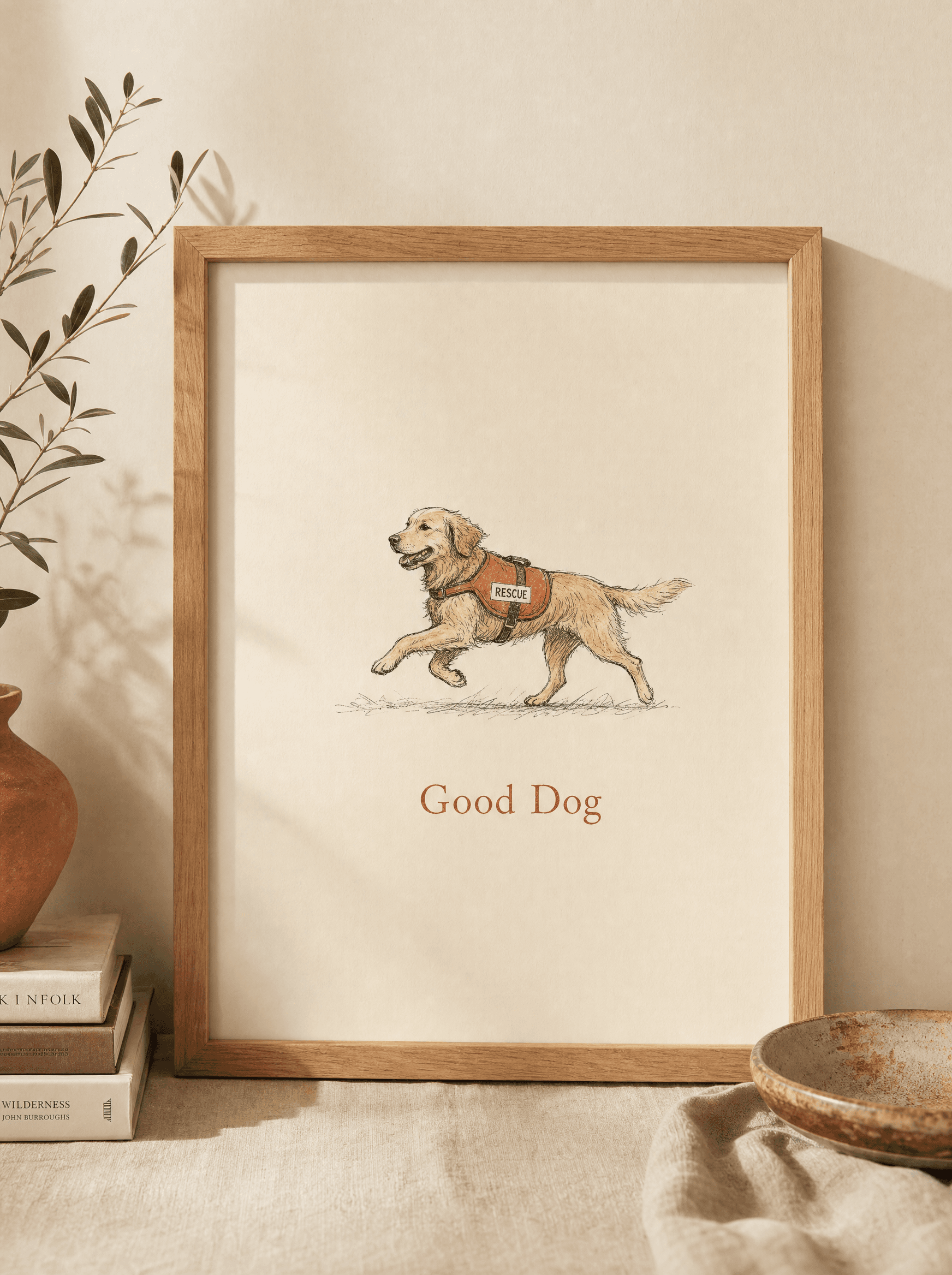
made for labrador retriever people.

Sources
where this guide came from.
last updated: May 17, 2026